
You inherit undocumented systems
The person who built the flow left. The map didn't.
For Developers
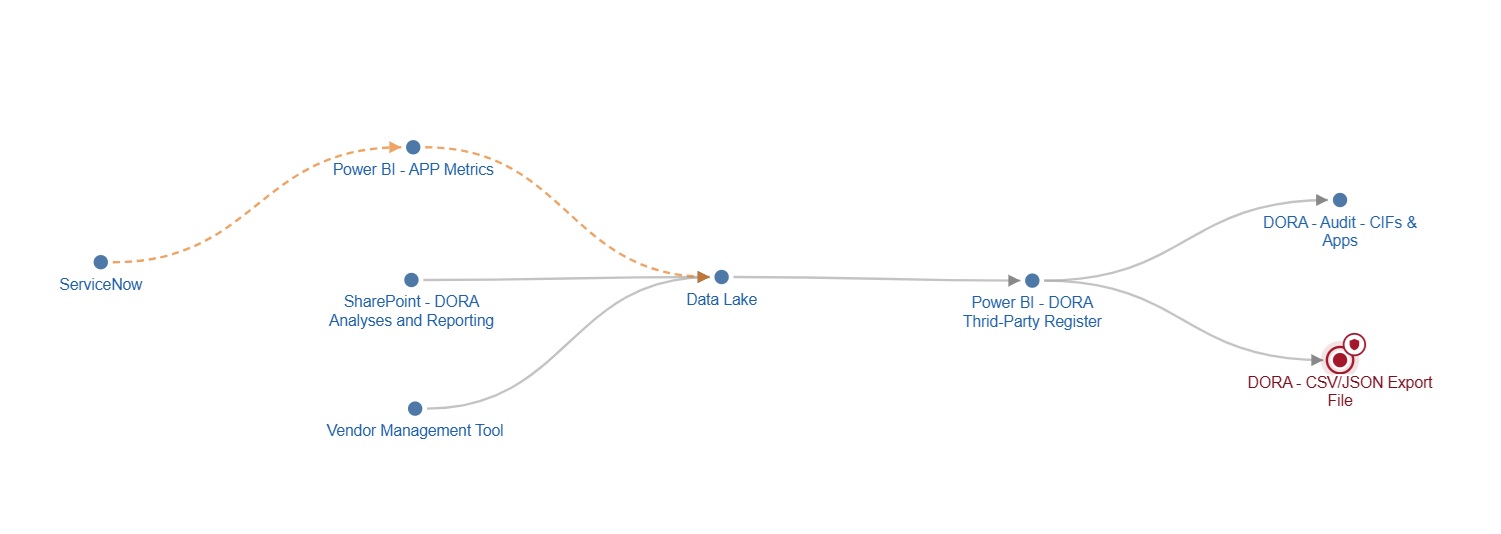
Every flow, connector and API you build depends on upstream sources and feeds downstream consumers you never see. Run an impact analysis in Asset Navigator and know what your change touches before you push the changes.
Why developers use it
The person who built the flow left. The map didn't.
A renamed field or a retired connector can break a report three teams away.
You used to answer from memory. Now you answer from the map.
HOW DEVELOPERS USE IT
Open the flow, connector or API you're working on. See which assets it links, and which datasets it reads and writes.
Before you rename a column or change a format, open the dataset and see every component and asset that consumes it, with its data classification and confidentiality.
Run upstream and downstream impact analysis on the application, AI agent or report your component belongs to. If it's flagged business critical or regulatory critical, you know before the review, not after.
See which environments your component is deployed in, so a test change doesn't quietly hit production dependencies.
Find the other projects that reuse your datasets and components, and who to talk to before you change them.
Send documentation through our API from your own scripts or AI agents, inside your environment. You decide what is shared.
POST /api/components
    { "name": "orders-sync",
      "reads": ["customer_orders"],
      "env": "production" }
What you get
Know the consumers before you break them.
Understand an unfamiliar landscape in an hour, not a month.
Architects and compliance see the same map you do, so fewer meetings to explain dependencies.
One place, linked to real connections, not a wiki page from 2022.
Who it's for
Everyone sees what they need, and acts with confidence.
See the potential impact of projects and changes, without relying on individual team members to explain the landscape.
Read moreSee the technical landscape across business units and regions, to spot reuse, avoid duplicate builds and keep new solutions aligned with your architecture.
Read moreUnderstand where information comes from, how it moves through systems, and which reports or processes depend on it.
Read moreSee which assets and AI agents support your critical functions, with their classification, criticality and providers. Export your AI inventory report, ready for your auditor or regulator.
Read more